How High-Tech Bikes Revolutionize Commute
The Dawn of a New Urban Era
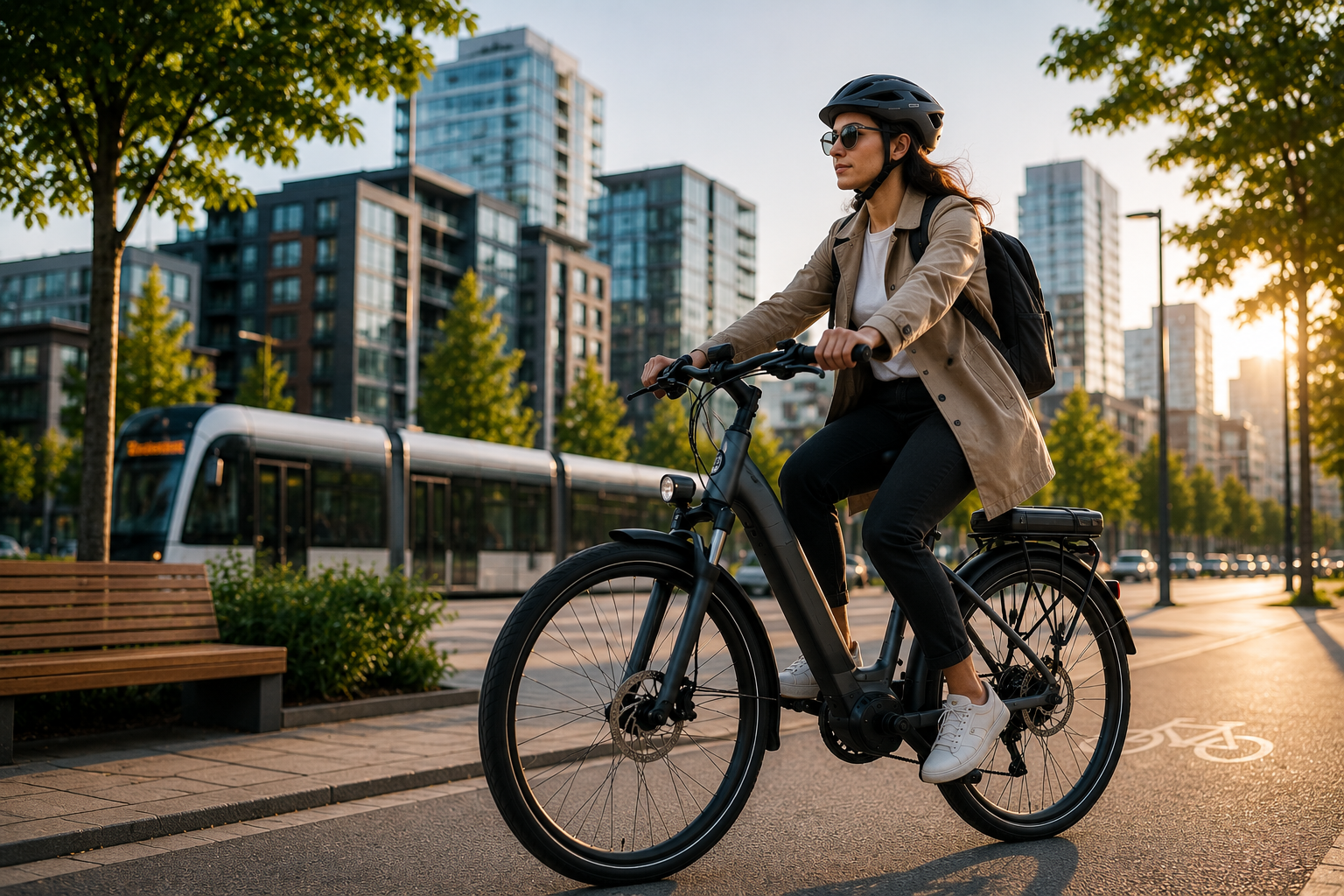
For decades, the urban commute has been synonymous with stress, gridlock, and frustration. Millions of city dwellers worldwide have resigned themselves to the daily grind of inching forward in traffic jams or being packed like sardines into unreliable public transit systems. However, a silent, powerful paradigm shift is sweeping through metropolitan areas. As city infrastructure evolves and environmental concerns reach a crescendo, high-tech bikes revolutionize commute routines, turning what was once a dreaded chore into the highlight of the day.
We are no longer talking about the simple, pedal-powered cruisers of the past. The modern electric bicycle has evolved into a sophisticated, interconnected piece of machinery. By integrating cutting-edge technologies previously reserved for luxury automobiles—such as artificial intelligence, radar systems, biometric security, and the Internet of Things (IoT)—high-tech bikes revolutionize commute experiences in ways we could only dream of just a few years ago. In this comprehensive analysis, we will explore the precise technological advancements driving this revolution and why a smart e-bike might be the ultimate upgrade for your daily transit.
What Exactly Makes an E-Bike "High-Tech"?
To understand how high-tech bikes revolutionize commute patterns, we must first define what separates a "smart" e-bike from a standard electric bicycle. A standard e-bike features a battery, a motor, and a basic controller to provide pedal assistance. A high-tech e-bike, however, acts as a rolling computer. These bicycles are equipped with an array of sensors, microprocessors, and wireless connectivity chips (Bluetooth, 4G/5G, and GPS).
This integration of IoT allows the bicycle to communicate directly with your smartphone, the cloud, and even the surrounding city infrastructure. It gathers data on your pedaling cadence, torque output, heart rate, and environmental conditions. By processing this data in real-time, the bike can automatically adjust its motor output to provide the exact amount of assistance needed, anticipating hills before you even feel the incline. This seamless synergy between human and machine is the cornerstone of how high-tech bikes revolutionize commute efficiency.
The End of Range Anxiety: Next-Generation Battery Management
Historically, the biggest barrier to electric vehicle adoption—whether cars or bicycles—has been "range anxiety." Commuters lived in fear of their battery dying halfway to the office, leaving them to awkwardly pedal a heavy, motorized bicycle on their own power. Today, high-tech bikes revolutionize commute reliability by completely eliminating this fear through Advanced Battery Management Systems (BMS).
Modern smart e-bikes utilize predictive AI to manage battery life. By inputting your destination into the bike's companion app, the system analyzes the topographical map of your route, factoring in elevation changes, predicted wind resistance, and your historical riding style. It then dynamically rations the battery power to guarantee you arrive at your destination with a predefined percentage of charge remaining. Furthermore, regenerative braking technology—which captures kinetic energy during downhill descents and braking—has become significantly more efficient, passively feeding power back into the battery and extending the functional range of your city commute.
Unprecedented Safety: Radar, ABS, and Automated Lighting
Navigating chaotic city streets alongside heavy, fast-moving vehicles is intimidating. A core reason why high-tech bikes revolutionize commute adoption rates is the massive leap forward in integrated safety features. Manufacturers have heavily invested in preventative technologies designed to keep riders safe in unpredictable urban environments.
Rear-Facing Radar: Similar to blind-spot monitoring in modern cars, several high-tech e-bikes now feature integrated rear-facing radar. This system detects vehicles approaching from behind—even at high speeds—and provides visual and haptic alerts to the rider via a handlebar display or vibrating grips. It allows the cyclist to anticipate overtakes and safely maintain their lane positioning.
Anti-Lock Braking Systems (ABS): Skidding out on wet pavement or loose gravel during a panic stop is a major cause of cycling accidents. High-tech e-bikes are now being equipped with miniature ABS modules. These systems monitor wheel speed hundreds of times per second; if they detect the front wheel locking up during hard braking, they rapidly modulate the brake pressure, allowing the rider to maintain steering control and stop safely in shorter distances.
Smart Reactive Lighting: Standard bike lights simply turn on and off. High-tech bikes feature reactive lighting systems. As you decelerate, the taillight automatically brightens to act as an automotive brake light. Furthermore, ambient light sensors automatically adjust the brightness of the headlight depending on whether you are riding in broad daylight, passing under a dark overpass, or navigating home at night. Some advanced models even feature laser projections that draw virtual bike lanes on the ground around the rider, drastically increasing visibility to passing motorists.
Ironclad Anti-Theft Innovations
A premium electric bicycle is a significant financial investment, and urban bike theft is a rampant issue. High-tech bikes revolutionize commute peace of mind by incorporating military-grade security features, transforming the bike from an easy target into a fortress.
Traditional physical locks are now only the first line of defense. High-tech e-bikes feature biometric security; they will not turn on or engage the motor unless unlocked via a fingerprint scanner on the handlebars or a proximity Bluetooth handshake with the owner's smartphone. If an unauthorized individual attempts to move the locked bike, a multi-tiered defense system activates. First, a deafening decibel alarm sounds. Simultaneously, the motor physically locks the rear wheel, making it impossible to pedal or roll the bike away. Finally, the bike immediately sends a push notification to the owner's phone, utilizing a hidden, integrated GPS chip (powered by a backup internal battery) to broadcast the bike's real-time location. These smart security features make stealing—and keeping—a high-tech e-bike nearly impossible.
Health and Fitness: The Ultimate Wearable Sync
While e-bikes provide motor assistance, they still offer a fantastic cardiovascular workout. High-tech bikes revolutionize commute fitness tracking by seamlessly integrating with the broader health tech ecosystem.
Instead of relying on a separate cycling computer, a smart e-bike syncs directly with Apple Health, Google Fit, and popular smartwatches (like the Apple Watch or Garmin devices). Some e-bikes feature "Heart Rate Mode." In this mode, you select your target heart rate (e.g., 120 BPM). As you pedal, the bike continuously monitors your pulse via your smartwatch. If you hit a hill and your heart rate spikes above 120, the bike automatically increases the motor assistance to lower your exertion. If you are coasting on a flat and your heart rate drops, the bike reduces the motor power, forcing you to pedal harder. It transforms your daily commute into a perfectly optimized, personalized fitness routine without ever forcing you to break a heavy sweat right before a morning meeting.
The Environmental and Economic Impact
Beyond personal convenience, high-tech bikes revolutionize commute macro-economics and urban environmentalism. The data collected by fleets of smart e-bikes—anonymized and aggregated—is frequently shared with city planners. This data highlights the most heavily trafficked cycling routes, areas with frequent harsh braking (indicating dangerous intersections), and pothole locations. Cities can then use this data to strategically build better bike lanes and improve infrastructure where it is needed most.
Economically, while a high-tech e-bike may cost between $2,000 and $5,000 upfront, the return on investment is staggering. By completely replacing a car for the daily commute, riders save thousands of dollars annually on gasoline, parking garage fees, insurance premiums, and vehicle depreciation. Charging a massive e-bike battery costs pennies, making it one of the most financially efficient motorized vehicles ever created.
Are High-Tech Bikes Worth the Investment?
When prospective buyers see the price tags of premium smart e-bikes, a common question arises: is the technology truly necessary? The answer depends entirely on the nature of your commute. If you live a mile from work in a quiet suburb, a standard, analog bicycle is perfectly adequate. However, if you are navigating 10 miles of dense, chaotic urban traffic, the calculus changes drastically.
The way high-tech bikes revolutionize commute safety alone justifies the cost for many. The peace of mind provided by rear-facing radar, ABS brakes, and GPS theft-tracking transforms the urban riding experience from nerve-wracking to highly enjoyable. When you factor in the elimination of range anxiety and the integration of automated fitness tracking, a high-tech e-bike transcends being merely a bicycle; it becomes a comprehensive transportation and lifestyle tool.
The Future of Urban Mobility
We are only at the beginning of this technological curve. The next five years will see even more dramatic innovations. We anticipate the integration of V2X (Vehicle-to-Everything) communication, allowing high-tech bikes to digitally "talk" to traffic lights (to catch green waves) and to surrounding smart cars (to prevent collisions). Solid-state batteries will eventually double current ranges while slashing charging times to minutes.
As these technologies scale and become more affordable, the shift away from single-occupancy cars toward smart, light electric vehicles will accelerate. Cities will become quieter, the air will become cleaner, and the daily commute will transition from a daily burden into a moment of outdoor joy.
Conclusion
It is an undeniable fact that high-tech bikes revolutionize commute dynamics on a global scale. By brilliantly merging the simple, elegant mechanics of the traditional bicycle with the processing power of modern computing, these vehicles offer an unbeatable combination of speed, safety, fitness, and environmental sustainability. For the modern urban professional, the question is no longer whether to commute by electric bike, but rather how soon they can join the revolution. Embrace the technology, skip the gridlock, and experience the future of urban mobility today.